


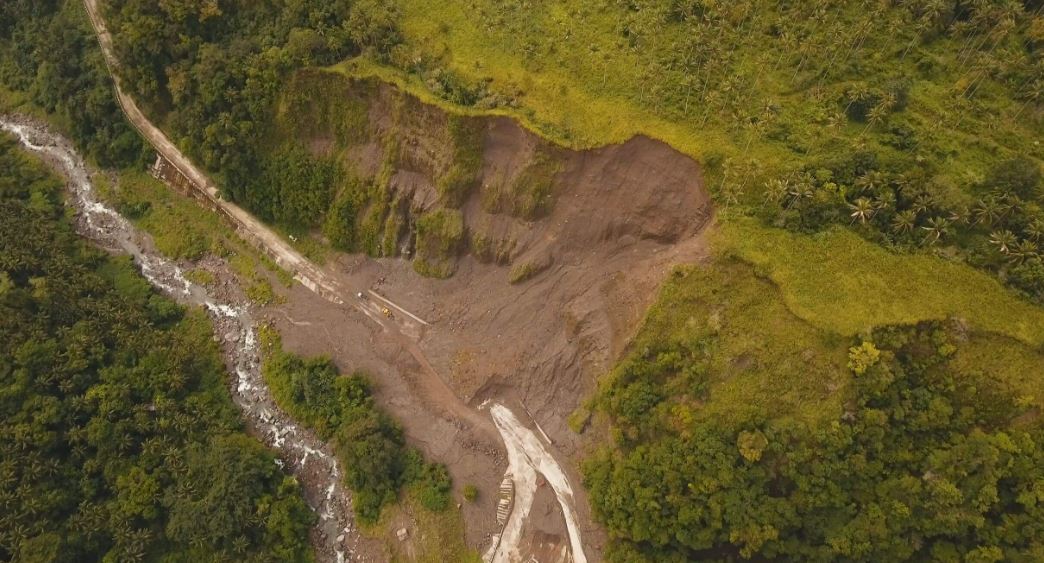
Landslide monitoring with borehole inclinometers
Landslides rarely occur without warning. In most cases, the ground begins to move slowly underground long before visible cracks or collapses appear on the surface. Detecting these deep movements early is essential to protect infrastructure, construction sites, transportation networks, and communities exposed to hydrogeological risk.
This is why borehole inclinometers have become one of the most important tools in modern geotechnical monitoring.
Next Industries develops advanced IoT borehole inclinometer systems designed to continuously monitor underground horizontal displacements with extremely high precision. By combining MEMS sensor technology, remote data acquisition, cloud platforms, and real-time analytics, these systems transform raw geotechnical data into predictive safety strategies.
Today, monitoring is no longer just about collecting measurements—it is about anticipating risks before damage occurs.
Why deep ground movement monitoring is so important
The most dangerous soil movements often happen beneath the surface, where instability develops gradually and invisibly.
A slope may appear stable externally while underground shear surfaces slowly evolve due to rainfall, groundwater pressure, excavation works, or natural geological processes. Without continuous monitoring, these movements can remain undetected until structural damage or landslides become unavoidable.
Next Industries’ borehole inclinometers are specifically designed to identify these hidden movements by measuring angular variations and horizontal displacements at different depths.
This allows engineers and geotechnical specialists to determine:
- the depth of the sliding surface
- the direction of movement
- the speed of displacement
- the evolution of instability over time
These insights are essential for planning stabilization works, protecting critical infrastructure, and reducing emergency intervention costs.
How Next Industries borehole inclinometers work
The system consists of a grooved inclinometer casing installed inside a borehole drilled into the ground.
Inside the casing, Next Industries integrates high-resolution biaxial MEMS sensors capable of detecting extremely small angular variations relative to the vertical axis.
Each sensor continuously measures changes in inclination along the borehole depth, generating a detailed deformation profile of the terrain.
The collected data is then transmitted through data loggers and IoT communication systems such as NB-IoT, LoRaWAN, or 4G/5G networks toward cloud-based monitoring platforms.
This integrated architecture enables:
- real-time monitoring
- automatic alarm activation
- historical trend analysis
- predictive maintenance strategies
- remote access from web dashboards and mobile devices
As a result, operators can react quickly whenever abnormal movement patterns emerge.
Precision and reliability in harsh environments
Geotechnical monitoring systems often operate in extremely demanding conditions, including humidity, groundwater infiltration, temperature variations, and corrosive soils.
For this reason, Next Industries designs its borehole inclinometers using highly resistant materials such as AISI 316 stainless steel, ensuring long-term durability and operational reliability.
The high sensitivity of MEMS technology allows the detection of angular changes as small as 0.001°, making it possible to identify millimetric soil displacements before they evolve into critical failures.
This level of precision is particularly important in:
- landslide-prone slopes
- dams and embankments
- tunnels and underground excavations
- retaining walls
- urban infrastructure projects
- bridge foundations and transportation corridors
Real applications of Next Industries borehole inclinometers
Landslide Monitoring
In unstable mountainous areas, borehole inclinometers help identify active sliding surfaces and monitor landslide evolution over time.
Thanks to continuous monitoring, engineers can activate early warning systems and implement drainage or stabilization measures before catastrophic failures occur.
Deep Excavations and Urban Construction
Large urban excavations can generate dangerous ground movements that threaten nearby buildings and underground utilities.
Next Industries’ inclinometer systems provide continuous displacement monitoring during excavation activities, helping engineers adapt support systems in real time and maintain construction safety.
Dams and Embankments
Hydraulic infrastructure is constantly exposed to stress caused by water pressure and seasonal environmental changes.
By monitoring deep horizontal displacements, inclinometer systems help identify progressive deformations that may compromise long-term structural stability.
Tunnels and Retaining Structures
In underground construction projects, borehole inclinometers support continuous control of retaining walls and surrounding soil behavior, reducing risks during excavation and operation phases.
From monitoring to predictive risk prevention
The real value of geotechnical monitoring lies not only in measurement accuracy, but in the ability to transform data into preventive action.
Next Industries integrates sensors, IoT gateways, cloud dashboards, and automated alert systems into a single intelligent monitoring ecosystem.
The workflow typically includes:
- Detection of underground movements through MEMS sensors
- Data acquisition via dataloggers
- Wireless IoT transmission to cloud platforms
- Real-time visualization and trend analysis
- Automatic alarms when thresholds are exceeded
- Immediate operational response and mitigation measures
This predictive approach helps reduce downtime, optimize maintenance costs, and significantly improve infrastructure safety.
Conclusion
As climate change and urban development increase geotechnical risks worldwide, continuous monitoring of deep ground movements has become essential.
Next Industries’ IoT borehole inclinometers provide engineers and infrastructure managers with accurate, reliable, and real-time information needed to prevent landslides and structural failures before they become emergencies.
By combining millimetric precision, IoT connectivity, and predictive analytics, these systems represent a new standard in geotechnical risk management.
For organizations operating in critical environments, prevention is no longer optional—it is a strategic necessity.
Discover Next Industries monitoring solutions
Next Industries develops advanced geotechnical and structural monitoring systems designed for infrastructure safety, predictive maintenance, and real-time risk prevention.
Contact the team to discover how IoT monitoring technologies can improve the safety and resilience of your projects: info@nextind.eu